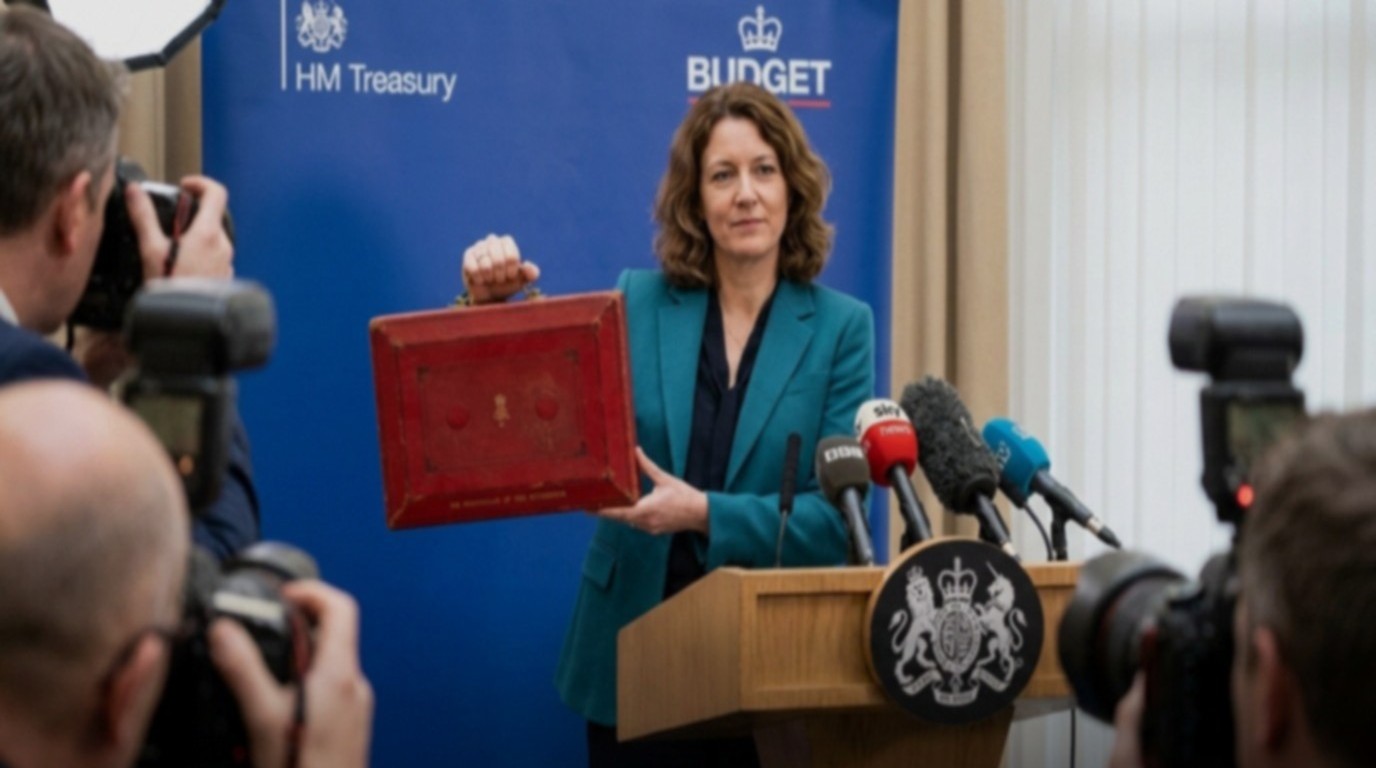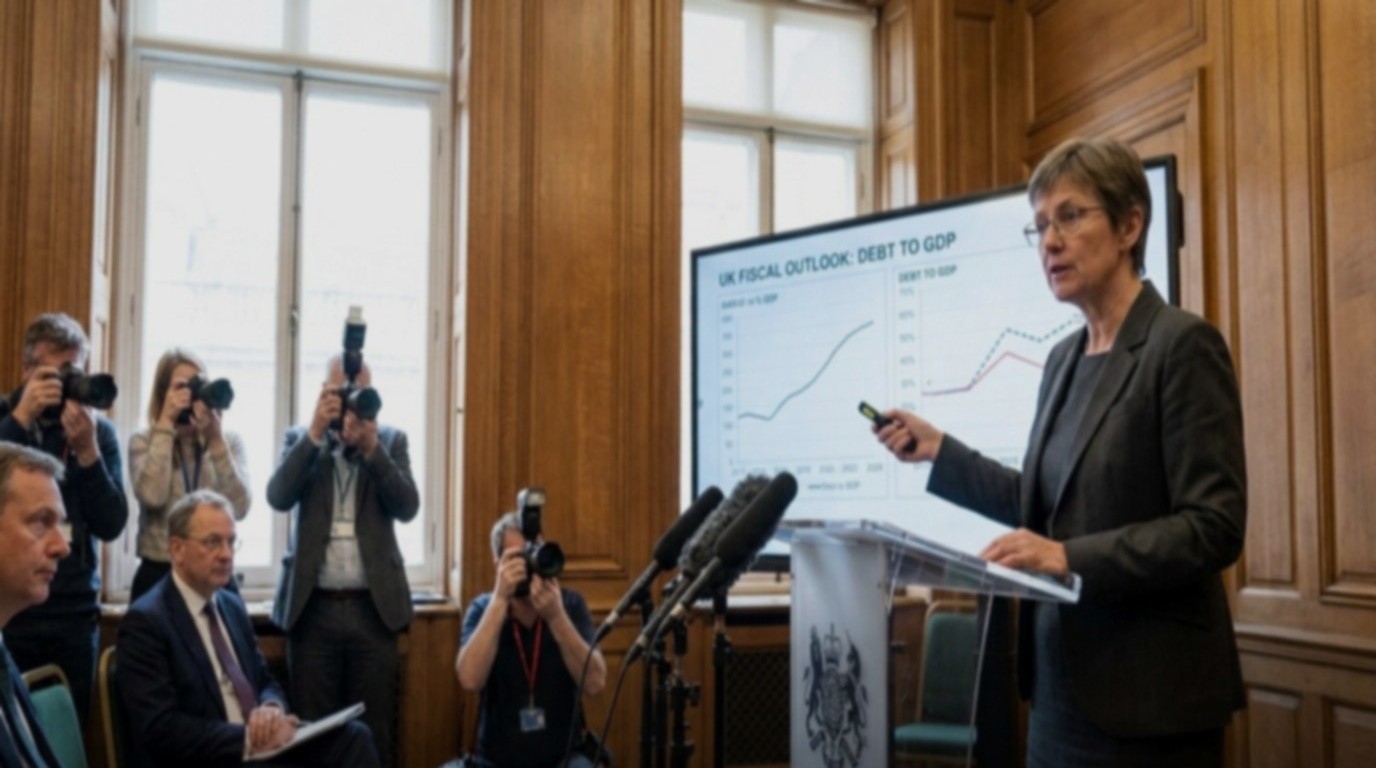
The Office for Budget Responsibility's November forecast, published alongside the Chancellor's Autumn Budget, upgraded growth for next year and lowered the path for inflation. Less noticed, but possibly more significant, was a quiet downward revision to its gilt yield assumptions.
The Office for Budget Responsibility upgraded its UK growth forecast for 2025 and 2026 in its November Fiscal Outlook, published alongside the Chancellor's Autumn Budget. The watchdog now expects the economy to grow by 1.1 per cent this year and 1.4 per cent in 2026, against 0.8 and 1.0 per cent respectively at the spring statement. The 2027 forecast was lifted to 1.6 per cent.
The OBR's chair, Richard Hughes, said the upgrade reflected "a sequence of more positive data — on consumer spending, on the labour market and on the external environment — that have arrived since we closed off our previous forecast in March." He was careful, however, to caution that the central forecast was "consistent with a relatively narrow range of outcomes" and that the risks were "still two-sided."
Inflation: back to target by the end of 2026
The OBR's central forecast now sees CPI inflation at 2.6 per cent at the end of 2025, falling to 2.3 per cent by the end of 2026 and to the 2 per cent target by the end of 2027. The path implies a markedly more benign outlook for the Monetary Policy Committee, although the OBR noted that the central forecast assumes only two further quarter-point cuts in Bank Rate over the forecast period.
The quiet gilt yield revision
Less noticed, but arguably more important for the Chancellor's arithmetic, was a 25 basis point downward revision to the OBR's market gilt yield assumptions across the forecast period. The OBR now assumes a 10-year gilt yield averaging 4.2 per cent, against 4.45 per cent in March. The revision is a consequence of the lower gilt yields that have prevailed since the spring — but the OBR noted that "a material share of the improvement in the fiscal outlook reflects these financial conditions rather than any underlying improvement in the productive capacity of the economy."
The tax measures, by the OBR's reckoning
The OBR's estimate of the macroeconomic effect of the Chancellor's tax package was, as expected, more pessimistic than the Treasury's. The watchdog expects the package to reduce employment by 50,000 on average across the forecast period and to lower GDP by 0.2 per cent in the long run. The Treasury had suggested the package would be "broadly neutral" on growth.
Hughes declined to be drawn on the political implications of the divergence, saying only that the OBR's modelling was "based on standard elasticities" and that the Treasury's growth-impact assessment had been "subject to the usual degree of judgement." The exchange is unlikely to be the last word on the matter; the Treasury Select Committee is expected to recall both Hughes and the Chancellor in the new year.
What it means for the MPC
For Threadneedle Street, the November forecast is, in places, a comfort. The lower inflation path is consistent with the MPC's own central case and, if delivered, would justify the gradual easing the Bank has been signalling. The upgrade to growth, however, complicates the picture: a stronger economy is one in which the case for cutting rates is harder to make.
Most economists expect the Bank to hold rates at its December meeting, with a first cut in February. The OBR's forecast suggests, however, that the window for that cut is real — and that the longer the Bank waits, the greater the risk that policy becomes unnecessarily restrictive.